Customized cabinets are the pillar of a functional and fashionable kitchen. Different from standard cabinet units or semi-customized cabinets, customized cabinets are tailored to your space, lifestyle and personal taste. They can maximize storage space and reflect your unique aesthetic. However, a perfectly designed custom cabinet can be overwhelming. In this comprehensive guide, we will break down the process of customizing cabinets into simple and actionable steps. Whether you are renovating a small apartment kitchen or a spacious open space, these suggestions will help you create cabinets that are both aesthetically pleasing and practical, while enhancing the value of your kitchen.
Step 1: Start with spatial planning and measurement
The primary content of custom cabinets is precise space planning and measurement. This step can ensure that your cabinets fit perfectly, avoid wasting space and match the layout of your kitchen.
- Draw up your kitchen layout: Determine the areas for preparing dishes, cooking, storing, cleaning, and your movement route in the kitchen. Common layouts include L-shaped kitchens, U-shaped kitchens and open kitchens.
- Precise measurement: Use laser measurement to record the length, width and height of the kitchen, as well as the positions of Windows, doors, sockets and pipes. Don't forget to record the height of the ceiling - this determines whether you can add tall cabinets to increase additional storage space.
- Ingenious utilization of corners: Custom cabinets perform exceptionally well in addressing areas with special shapes such as corners. Measure these areas carefully - they are perfect for placing in pull-out food storage cabinets or custom seasoning racks.
Step 2: Determine your storage requirements
Custom-made kitchen cabinets are all designed to tailor storage space. Ask yourself: What do I store most often? What has made my cabinet so messy now? Custom storage solutions are suitable for most situations:
- Pull-out drawers: Replace deeper and hard-to-reach lower cabinets with pull-out drawers for POTS, pans and baking trays. Add separators to keep them organized.
- Pantry cabinets: Custom pantries can be designed to meet your food storage needs - from tall, narrow units with small Spaces to storage cabinets with built-in sliding shelves.
- Home appliance storage: Hide small appliances in a large-capacity custom cabinet to keep your countertop tidy.
Step 3: Select the style and aesthetics of the cabinets
Once you have determined the functions, it's time to focus on the style. Your custom-made cabinets should complement the overall design style of your home and your personal taste. The following are the most popular cabinet styles:
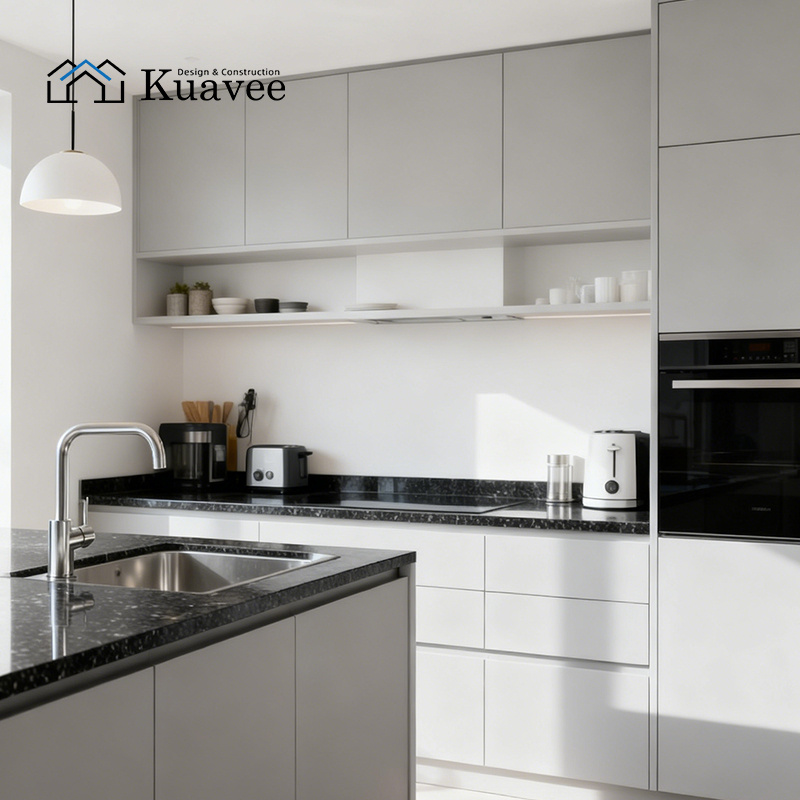
- Flat kitchen cabinets: Stylish and modern, with no raised or recessed panels. The ideal minimalist or modern kitchen is often paired with a stemless design.
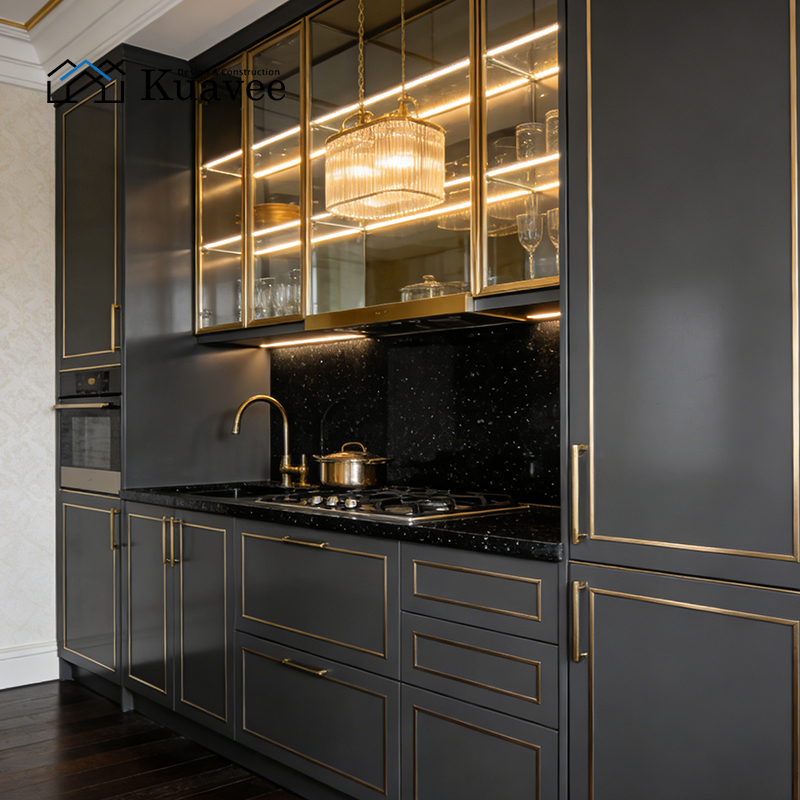
- Convex panel kitchen cabinet: More luxurious, with a raised central panel and decorative edges. It is very suitable for traditional or classic families.
Aesthetic choice:
- Color and finish: Choose the color that suits your kitchen cabinet doors. Neutral tones (white, cream, gray) are not easy to go wrong and can be easily matched with backsplashes and countertops. If you want to be bolder, you can try dark wood colors (walnut, oak) or melancholy tones (navy blue, forest green).
- Hardware: Modern kitchens typically feature smooth, simple handles or handleless designs; Traditional kitchens prefer luxurious knobs made of brass or bronze.
Step 4: Select the material for the cabinets
Custom-made cabinets are an investment, so choose durable materials that can withstand daily use. The materials you choose will also affect the appearance, cost and lifespan of your cabinets.
- Solid wood kitchen cabinet: A classic choice for warmth and durability. Commonly used woods include oak, maple, cherry and walnut. Solid wood can be dyed or painted, but it may expand or contract with humidity.
- Plywood kitchen cabinet: More stable and cheaper than solid wood. Plywood cabinets are usually covered with veneer, laminate or paint. The perfect balance between quality and value.
- Stainless steel kitchen cabinet: Modern and industrial, featuring excellent durability and hygiene. Rust-proof, stain-proof, heat-resistant, but can leave fingerprints. It is often used in commercial styles or modern kitchens.
Step 5: Cooperate with professional cabinet manufacturers
Designing custom cabinets is complex, so collaborating with a reputable cabinet manufacturer or kitchen designer is crucial. They can help you transform your ideas into functional designs, avoid common mistakes, and ensure that the final product meets your expectations.
Finally summarize
We are a cabinet manufacturer with 15 years of experience. We can design a dedicated kitchen for you based on your needs and select and customize the best cabinets for you


